Hand-Layered IPS e.max Restorations in Marrakech
For single anterior crowns or veneer cases where every micron of light reflection matters, layered IPS e.max represents the pinnacle of ceramic craftsmanship at our Marrakech studio.
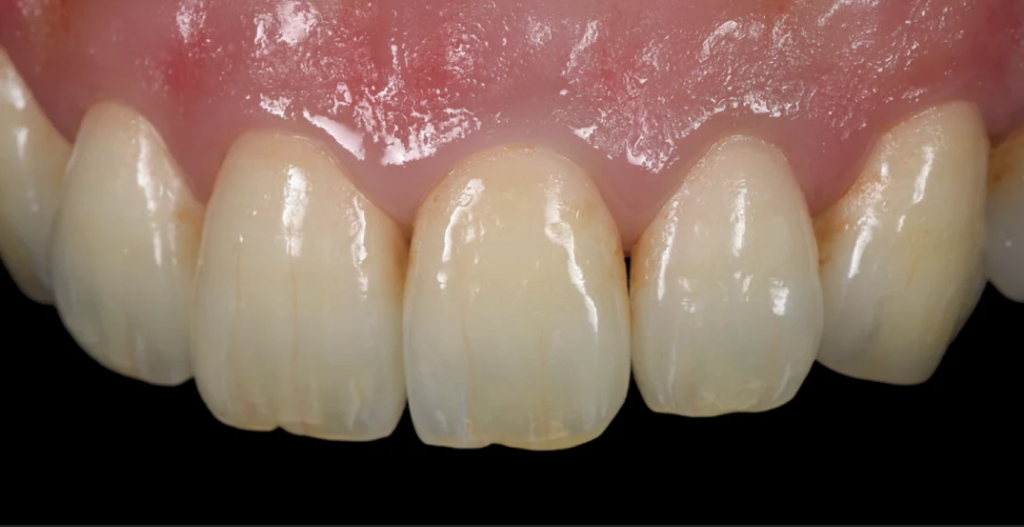
Artisan Craftsmanship at ELWAFA DENTAL Laboratory
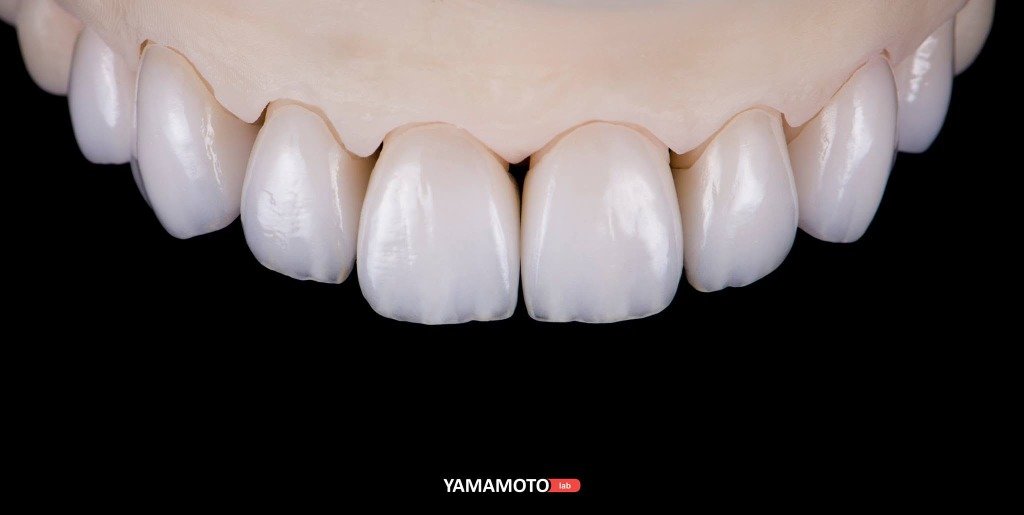
While monolithic lithium disilicate offers undeniable strength, layered IPS e.max surpasses it in optical nuance. By uniting a strong lithium disilicate framework with nano-fluorapatite layering ceramic (IPS e.max Ceram), we achieve a visual depth identical to intact youthful enamel.
Our ceramists proceed via the 'cut-back' technique: the core is anatomically reduced at the incisal third to create space for customized layering. Layer after layer, dentin mamelons, opalescents, bluish translucencies, and natural enamels are applied with fine sable brushes.
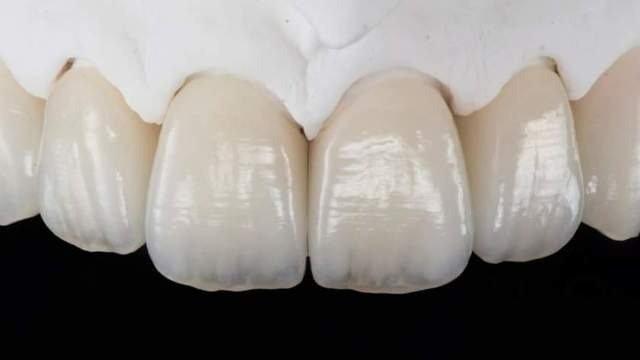
The intraoral result is striking: specular surface light reflection and internal opalescence render the restoration indistinguishable from adjacent natural teeth even under demanding lighting.
Why Prescribe This Restoration?
Optical Depth & Three-Dimensionality
Ceramic layering generates lifelike internal light refraction without flatness or artificial chalkiness.
Bespoke Clinical Characterization
Exact reproduction of natural enamel micro-cracks, white fluorosis flecks, and amber chromatic zones.
High Core Strength
Solid lithium disilicate substructure providing a safe mechanical foundation with 400+ MPa.
Biological Tissue Integration
Biocompatible glass-ceramic with high-polish cervical margins respecting adjacent gingival tissues.
Laboratory Fabrication Protocol
Glass-Ceramic Core & Cut-Back
Milling or pressing of the lithium disilicate foundation with controlled incisal reduction.
Internal Effect Stratification
Fine-brush application of mamelon masses, internal ceramic stains, and bluish opalescents.
Enamel Buildup & Vacuum Firing
Translucent enamel overlay and firing cycles in our programmed ceramic furnaces.
Surface Texture & Glaze
Sculpting of perikymata lines, developmental lobes, and mechanical polishing for vibrant light reflections.
Primary Clinical Indications
- Single maxillary central incisor restoration (the most demanding aesthetic challenge in restorative dentistry).
- Anterior veneers with incisal edge layering for patients with high smile lines.
- Restoration of traumatized or fractured teeth with complex chromatic patterns.
- High-aesthetic cases requiring individualized characterization.
Insights for Dental Surgeons & Patients
When should layered e.max be chosen over stained monolithic e.max?
For posterior teeth or multi-unit smile transformations, stained monolithic e.max is effective and cost-efficient. However, for a single isolated maxillary central incisor or high-value aesthetic rehabilitation, layered e.max is essential to match the contralateral tooth.
Can we send the patient to the Marrakech laboratory for custom shade matching?
Yes, we gladly welcome patients referred by your clinic at our Marrakech laboratory for spectrophotometric and high-definition photographic shade verification with our master ceramists.
Is layered e.max etched and bonded like a standard veneer?
Absolutely. The lithium disilicate substrate is etched with hydrofluoric acid and silanated following established adhesive protocols.
Complementary Prosthetic Solutions